Showing posts with label psychedelic. Show all posts

20 September, 2018

A taster from the next edition of The Cosmic Egg CD-Rom

Nine Days' Wonder

Eccentric and unique vocalist Walter Seyffer had fronted numerous bands during the 1960s. He claims to have established the Mannheim based Nine Days Wonder in 1966, then known as The Graves, who gradually transformed into Nine Days' Wonder. A 1969 line-up is documented as: Rolf Henning (guitar), Walter Seyffer (vocals, drums), Winfried Schmidt (bass) and Bernd "Ravi" Unger (guitar). But Nine Days' Wonder proper (or, as we know them) gelled as a new line-up in February 1970, with an Austrian (Karl Mutschlechner), an Irishman (John Earle) and an Englishman (Martin Roscoe), to create a bizarre and fascinating rock fusion showing distinct Zappa and British underground rock influences.

Their debut LP, originally issued in a green foam rubber cover, but more widely known with the British Hipgnosis design, saw them present a music roughly in the same field as Supersister or Moving Gelatine Plates, sans the Canterbury references. Nine Days' Wonder were a distinctly Krautrock twist on the genre, radical, innovative and unpredictable. Featuring what was really only four tracks (two of them lengthy segued extravaganzas, full of bizarre unlikely diversions) NINE DAYS WONDER presented an exceptionally complex music featuring highly powered instrumentals, diversions into jazz fusion, high experimentation, and above all some of the most fascinating and eccentric songs on record. The vocal piece "Morning Spirit" has to be heard to be believed! This band also worked incognito as Maternal Joy releasing a single in 1971. Rare live recordings of the 1970/71 Nine Days' Wonder exist documenting them with some excellent material that never gained release on LP.

It's hardly surprising that the original Nine Days' Wonder didn't last long, apparently falling apart during their first British tour. Thus, searching for a new band, Walter met up with Michael Bundt's group Medusa, who he joined replacing Geff Harrison who'd gone on to Twenty Sixty Six. Anyway, as the legend goes, Bacillus quite liked what Medusa were doing but didn't want to sign up a new band as Nine Days' Wonder still had an open contract, so Medusa became Nine Days' Wonder. Paradoxically WE NEVER LOST CONTROL was very tame compared to the previous album, without the jazzy elements and instead being more richly textured progressive rock with hard-rock touches. It is still an excellent album though, when judged on its own merits.

In one sense, the third album ONLY THE DANCERS rectified some of the former album's shortcomings, with a return to Seyffer's eccentric and bizarre lyrics in some of the more dramatic longer tracks, and a wider instrumentation, but also featured a lot in the way of "bubblegum" pop, which was deemed catchy and fresh when I first heard it in the 1970s, but has now worn thin. A couple of luminary guests featured: Dave Jackson (Van der Graaf Generator) and Steve Robinson (ex-Twenty Sixty Six And Then).

The CD only archive collection THE BEST YEARS OF OUR LIFE? has material spanning all this era, from an early aborted single, via an excellent early concert broadcast onto demos and rehearsal tapes, documenting the history and development of Nine Days' Wonder during their classic days.

As with most good rock bands, Nine Days' Wonder caused their own fateful end by attempting to go commercial - a tactic that generally backfires - and SONNET TO BILLY FROST was a disaster! Michael Bundt went on to form mainstream rock bands Nerve and Marilyn, and later established a solo career as a synthesist. Walter went on to the pop duo Wintergarden.


Still some copies of the old Rom available here
CDs at the UT Discogs shop

07 September, 2018

Trippy rock by ex Quarkspace super-group

SECRET SAUCER - TRI-ANGLE WAVES
(Salad Farm Studio SFS003) CD 60m

The American supergroup space-rockers are back with a third instalment, and one that revisits old ground whilst venturing on to new territory, particularly in its diversity.
For starters, the opener Night Encounter is just four musicians on synthesizers, evoking both the Teutonic cosmic masters and the ethereal moment of mid-1970's Gong. But we can't take the instrumentation literally, as A Sublime Metaphore which follows lists no electric pianos, but they are there. Sublime though it isn't, majestic it is, as the drums, bass and guitar add to the ride. Now we a have a break from Secret Saucer tradition, whereas the previous two albums flowed throughout non-stop, here we have a pause before we launch into the instrumental Hawkwind and/or Djam Karet styled Protoplasmic Accelerator which tangles around itself, with synth wash entwining around guitars ever more hypnotically, surging with energy but also holding back creating great tension, ever threatening to explode. Another synth respite is the vaguely Cluster meets Klaus Schulze and Tim Blake ooze/froth of Approaching Hunab Ku (whatever that is - ah, the wonders of the web, Wikipedia says: Hunab Ku is a name invented by Catholic missionaries sent to the Maya peoples of the Yucatan Peninsula in Mexico) which means that it's a very odd title. Light Years Away takes us back into high flying Quarkspace "Spacefolds" territory, and then we wind up with the more lethargic (but still heavy) trip Mind Mechanic which has a feel that reminds me of the legendary Mythos, as if they'd had Steve Hillage on guitar! I'm trying to use my imagination here, as describing such music is no easy task.
It's an interesting album also musician wise, especially in that no one is on the whole album. Steve Hayes (synthesizer, guitar), Dave Hess (synthesizer), and Greg Kozlowski (synthesizer, ebow guitar), each feature on all but one track. Ted Bobuka (drums) and Billy Spear (bass) appear on the four rock tracks. And various others feature here and there. No doubt this variety is what makes it more interesting, with a steady succession of ideas from different people at work, and not at all the hotchpotch jigsaw that such a way of working could result in. In that way I'm reminded of the Cosmic Jokers albums, which would have been similarly put together.
In all, it's another great one, and it's good to see that they decided to break their own mould, and surprise us all.


From Audion #57, page 32 (Autumn 2012)


A web p.s. Unfortunately all the three classics by Secret Saucer are sold out (although you can still find some on Discogs). At Ultima Thule we do still have in stock the excellent cosmic synth album by Greg Kozlowski under the name Antrilon.

This is my last web post from Audion #57. These have been all my articles from the issue, plus selected reviews. There's much more in the actual magazine, including a load of reviews by Andy G. (including his second Agitation Free reissues feature) and an article on world music fusion by Jules Conway, and a page about Djam Karet & related releases by myself, etc., etc...

Hills - Swedish underground meets Krautrocky sounds

HILLS - HILLS
(Sulatron 1002) CD 52m

This is the CD reissue of the debut LP by one of Sweden's top up-and-coming space-rock acts, the uninspiringly named Hills. But, despite such a name, the music found here is anything but uninspired.
The opening track Death 1 is paradoxically lively, with breathy echoed flute over an early Ozric Tentacles type groove, it is sadly all over too soon. With Istikial Street we descend into wonderful echo guitar sludge territory as first explored by Pink Floyd (Dave Gilmour), close to some early Ash Ra Tempel or Günter Schickert in improv mode, growing almost mid-70's Popol Vuh like, yet not - this is quite an original concoction, with the flute and twisted guitar. Totally unexpected though You Talk The Talk! takes us back to early Kraftwerk and Neu! territory with the best Florian Schneider flute impersonation I've heard. Rainship finds the band clapping along with solo guitar whist being drenched with water, and again goes Neu! like, but with other elements at play, like it's the best Stereolab I've heard as interpreted by Electric Orange!?. The mood tones-down a little with Ex Oblivione which is kind of moody Hendrix with an air of Fleetwood Mac's Albatros. But they can't keep the Neu! groove away it seems, and again we trundle along with Schlaraffenland this time more in the Mushroom vein, or Kollektiv sans the jazzy edge, adding odd vocal expressions, dub echo effects and some slight phasing (a sonic art largely lost since the 1970's). And finally, we have a different Neu! type mood to end it all, Messias with drawn-out fuzzy echo guitars over a light metronomic rhythm. Really the guitar reminds me mostly of Chrome on their READ ONLY MEMORY, but few of you will know what I mean by that.
In all then - highly derivative - but very good with it, and with enough ideas of their own to make it worth having!


from Audion #57, page 28 (Autumn 2012)

A web p.s. Hills have issued at least to more classics since, before changing style when breaking the international market. Unfortunately this one is o/p at the moment.

06 September, 2018

An obscurity of the 2011 Krautrock underground

M.T. WIZZARD - AB=SURD
(Fünfundvierzig 167) CD 67m

Around since the very early days of Krautrock, I was surprised to learn recently that M.T. Wizzard were formed way back in 1969! They hailed from Limburg and have featured Amon Düül II and Xhol members. They started as free-rock/fusion underground, and then got more conventional. It wasn't until the advent of the new-wave in Germany that they got to release an album. Then they flourished much like the UK bands Here & Now or Magic Muscle. Of course, as primarily a festival band, M.T. Wizzard have always been a bit hit and miss, although many of their releases contain excellent Krautrock moments.
So, what of this new album? Well, first off, I would never have known about it hadn't band leader Edgar Turk sent us a review copy. You see, shortly after its release the label Fünfundvierzig folded. But, even with Tim Belbe sadly passed away and no longer in the band, they seem to have refound their old 1969 spirit and done their best ever album!
Yes, now, over 40 years on they've moved back to doing free-rock/fusion underground! 9 of the 10 tracks here are acid fuelled, psychedelic, ethnic mega-trips that really sizzle, flow and do all the right things. The spirit of such bands as Amon Düül II, Embryo, Missus Beastly, Guru Guru - all present, but with added Turkish / Middle Eastern flavour. That's obviously down to Edgar's unusual tuning, sometimes giving it a buzz akin to the live recordings of Turkish legend Erkin Koray. Although all basically jams, we have moves towards Ozric Tentacles on some tracks, Can gone jazzy on others, and elsewhere. Never a dull moment...
Well, ahem, that's if you forget the last track, a really crappy rock/blues song that's totally out of character with all that's gone before! I wish they hadn't done that!


unfortunately there are no audio samples online

A blog p.s. - This review was in Audion 57, from 2012. However, the label went bust and it disappeared, never to appear on a distributor list since. Just got a second-hand copy though which I listed on Discogs.

Canterbury Scene Pioneers 4


Phil Miller / Pip Pyle

Matching Mole, Hatfield And The North, National Health

Canterbury Scene Pioneers 4
written by Alan Freeman

This feature is the story of two of the most prolific and widely travelled of musicians on the Canterbury Scene: guitarist Phil Miller and drummer Pip Pyle. These musicians were key to the development and sound of a number of groups that are some of the most important in British 1970s prog-rock/fusion.
As with many such musicians in the "Canterbury Scene", neither were from Canterbury at all: Philip Adam Miller (b. 22 January 1949, Barnet, Hertfordshire) and Philip "Pip" Pyle (b. 4 April 1950, Sawbridgeworth) first met pre-school in the town of Sawbridgeworth (halfway between Harlow and Bishop's Stortford, NNE from London) and became best friends so we're told. That's the simple story. But life's always more complex than that, and moving on over a decade or so, both became involved in music. Phil was self-taught on guitar from the age of 8, "playing seriously since 15" to quote Phil himself. Pip apparently took a few lessons from jazz drummer Buzz Greene, but is also largely self-taught. It seems that both had been playing together in various bands/projects until they joined Bruno's Blues Band, led by Phil's older brother Steve Miller (no, not the...) in 1966 when everything came together, and so the actual story begins...

Delivery
I don't know if there was ever any Bruno in Bruno's Blues Band, but by 1968 they decided to move on from blues after being joined by jazz saxophonist Lol Coxhill, becoming Steve Miller's Delivery with Carol Grimes (vocals) and Roy Babbington (bass).
The only document of the original Delivery is the one album FOOLS MEETING, released in 1970, when Lol had already left the band. It's an odd album though, and one that I've never really been able to appreciate. You can tell that what we have here is a really hot fusion band full of fresh ideas, about half the album is such creative stuff, involving unusual time signatures, intricate jigsaw like arrangements, and dazzling interplay/solos. But the problem for me is Carol Grimes, not that I dislike her vocals, it's just that when she's present she's just too much, with lyrics that are more like a rant and not that interesting either to my ears. It amounts to an album that sounds like two different bands, 1) an excellent fusion outfit, and 2) a British answer to Jefferson Airplane?
You can tell though the roots of what was to come. It is also obvious that they'd heard Soft Machine, and we're told that they became friends after meeting at Ronnie Scott's Jazz Club in London. But, as in many bands, tensions set-in, and Pip quit the group. So Pip became a bit of a wandering drummer for a while, playing on one tour with Chicken Shack, and then briefly in an early incarnation of Steve Hillage's Khan. Apparently Robert Wyatt recommended Pip to Daevid Allen who needed a drummer to finish his Banana Moon album, which in turn led to Pip joining Gong from May 1971 to early spring 1972 (featuring on the albums CAMEMBERT ELECTRIQUE and CONTINENTAL CIRCUS). Meanwhile Laurie Allen stepped-in as Delivery's drummer, who also then went on to Gong!


Here we have the start of the tangled "Canterbury Scene" web! It all gets so complex, especially with a number of bands that came and went without recording anything, like when Delivery fell apart, the Miller brothers formed the short-lived band: DC & The MBs (that's Dyble/Coxhill & The Miller Brothers) with Judy Dyble from Fairport Convention (although I know her best from a few tracks with proto King Crimson). They were apparently a more improv jazz based outfit who did a tour of Holland and a few domestic gigs before splitting up. It seems that no recordings exist at all.

Matching Mole
Now we have a major kink in the story, the formation of the first Canterbury supergroup in October 1971: Matching Mole so-named, according to Robert Wyatt, Soft Machine in French is Machine Molle which sounds like Matching Mole! You can check-out the Audion Soft Machine article for more on the roots of this. Robert's new choice band was himself (drums, vocals), with David Sinclair (keyboards) from Caravan, Phil Miller (guitar) from Delivery and Bill MacCormick (bass) from Quiet Sun.
Matching Mole were incredibly productive for a band that existed for less than a year, issuing 2 studio albums at the time, a number of radio sessions/appearances, tours of the UK, France, Holland, etc., now documented by 6 CD's worth of officially released material! Yet, even before the completion of the eponymous debut LP, David Sinclair had ceased to be a full time member, and was replaced by Dave McRae of Nucleus.
From my own experience, although I now deem MATCHING MOLE a fascinating record, it is flawed. Starting with the lamentful love song O Caroline it totally threw me when I first asked to listen to some of it in a local record shop. Thus I was convinced for years (backed up by his Yesterday Man on Virgin's "V" sampler) that I didn't like Robert Wyatt as a singer! I still think it's a weak start, but after that it's never less than magic. What we have is a virtual suite of interlocked themes and diversions, all with great titles like Instant Pussy, Dedicated To Hugh, But You Weren't Listening or Beer As A Braindeer amongst them. A Soft Machine meets Caravan and Egg mixture it mostly is, but with that added pazazz of Phil Miller's uniquely sizzly guitar, and the added surprise of Robert playing lots of highly processed Mellotron! David Sinclair's patent fuzz/distorted organ also features a lot. Yet we also have a lot of intricate mellow sections with electric piano and guitar weaving patterns against occasionally explosive flurries of percussion. There's obviously some Quiet Sun influence in there too, but that band was always a hard one to quantify! It's all the start of a brand new sound taking form.
The more documented line-up is that which recorded the second album: LITTLE RED RECORD. Whereas the debut was largely penned by Robert Wyatt, here much of the material is penned by the other members, which explains why it is quite different. The sound is tighter, much more episodic, and with a good few memorable tunes that worm their way into the brain. More humour too, like the prostitute tale Nan True's Hole and the deliberately dour but poignant God Song - islands in a complex tapestry of innovation.
If I go on much more here I'll be repeating my past Audion reviews. But it's safe to say that the Cuneiform releases SMOKE SIGNALS (sessions and live) and MARCH (live, March 1972) add up to yet more essential listening, and there's the various radio sessions, demos, etc. I've also encountered some well-dodgy bootlegs that, whilst musically excellent, prove that Robert wasn't the most reliable of vocalists! An amusing thought, in that it is said that Robert left Soft Machine to be more than just a drummer, he ended up with a new band that his role in concert was mostly as the drummer!


Quite why Matching Mole broke up in September 1972 we don't know. It could have something to do with Phil Miller leading a double life in the reformed Delivery (more about that below). Based on the BBC session of Robert Wyatt & Francis Monkman from December 1972, Robert indeed wanted to be more vocal. Another project: WMWM (Wyatt, McRae, Windo, Matthewson) said to be free jazz, also almost led to a new Matching Mole incarnation, however that idea was cut short in June 1973 after Robert fell from a third floor window during a party in London, leaving him paralysed from the waist down. But I digress, back to the Delivery story....

Delivery #2
To give this article some logic we now have to step back a bit, and retrace what had also been happening whilst Matching Mole were around. Steve Miller had joined Caravan, and features on their WATERLOO LILY album, where Delivery members: Lol Coxhill and Phil Miller also featured as guests. You can certainly hear the Delivery influence in Caravan at this time and hear that something new was cooking. That was obviously the interaction between Steve Miller and Richard Sinclair, which led to them splitting off and creating a new project under the Delivery name. Completing this line-up was Pip Pyle (back again after extensive work with Gong, and short stays in Paul Jones Group and All Wet And Dripping - both undocumented) and Phil Miller (in between gigs and sessions with Matching Mole).
The only official document of Delivery #2 that I know of is One For You included as a bonus on the Cuneiform CD reissue, which feels more like Caravan than Delivery really. Two live documents are known to me (others exist), the first being an outdoor gig at the Tower Of London Moat (21 July 1972) which includes a mixture of Delivery material, two Matching Mole numbers, and other new numbers in their embryonic state, like the Pip Pyle penned Shaving Is Boring and the vibrant Finesse Is For Fairies. The final Delivery gig, at the Brighton Dome (29 September) featured a similar set including a version of Waterloo Lily and is notable for Gong's Didier Malherbe as guest winds player.
Delivery reformed briefly for a booked session with the BBC in November 1972 with the line-up: Steve Miller, Phil Miller, Lol Coxhill, Roy Babbington, Pip Pyle, and Richard Sinclair After this Steve Miller became more of a musical nomad. He did two odd split albums with Lol Coxhill which I heard back in the late 1970s and never revisited, and also attempted yet another Delivery reformation, with Roy Babbington and Laurie Allan in 1973, but that fell apart when Babbington joined Soft Machine.

Delivery #2 on stage at The Tower of London Moat festival

Hatfield And The North
To Joe Public, the transition of Delivery into Hatfield And The North would have been seamless. In fact many Delivery bootleg recordings are incorrectly labelled as Hatfield And The North on the web. And scarcely a month had gone by with the new band, sans Steve Miller, with Dave Sinclair on keyboards instead. But why Hatfield And The North? Many reasons are given. Some ridiculous, all hearsay, so I won't repeat them here. It was a road sign often seen on the A1 out of London. I just think it fitted their wry sense of humour. Did they ever get any promoters asking to speak to Mr. Hatfield I wonder?
Hatfield And The North from late 1972 are an unknown quantity. I could not find any recorded documentation at all. A logical transition? Maybe. Though the "Hatfields" we know weren't born until Egg's Dave Stewart took over the keyboard role, debuting live with them on 19 January 1973. Combining his eclectic Egg style organ (with electronics, and also a newfound nimble style of electric piano) with the jazzy twisted Caravan meets Matching Mole hybrid, all made for a distinctive new style that (in retrospect) was unmistakable. Many early sessions and archive recordings can now be found on the two excellent anthologies: HATWISE CHOICE and HATTITUDE, giving an insight into how the sound developed and gelled.
As with many such British bands at the time, the only label interested enough to sign them up was Virgin Records. And, with Tom Newman as producer they had all the resources they needed to go the whole hog, and let their imaginations run riot. With 14 tracks in just over 46 minutes HATFIELD AND THE NORTH is a heady complex trip, with tracks ranging from 30 second bridges through to a huge 10 power-drive, and most of it segued together (extensive use of the studio as an instrument too), it's clever, witty and totally engaging. Richard Sinclair here came really into his own as a songwriter too, with lots of clever word-play, and wry witticism the order of the day, I still hear the odd joke hidden in there that I never realised before some 30 odd years on! True, it's like a continuation from songs in Caravan, but here the feel isn't normal songs, but poetry wound around the music, and sometime breaking the rules of the song format altogether. There was also a new twist "The Northettes" namely Amanda Parsons, Barbara Gaskin and Ann Rosenthal, adding extra vocal harmonies in a manner unheard anywhere else. One could say that Phil Miller was so in his element with such a creative brew his guitar so underpins it all, that he occasionally becomes transparent, only rarely startling us with a solo. Well he did have some serious competition with Dave Stewart. And holding it all together was the ever reliable Pip Pyle, also given freedom to be more than just a drummer. And, let's not forget the wonderful track titles like Going Up To People And Tinkling or Lobster In Cleavage Probe to name but two! A stunning album from start to end. Not forgetting the Robert Wyatt guest appearance too.
Many bands would burn-out after such a debut, but their second album THE ROTTERS CLUB was probably even more creative than its predecessor. Well, they hadn't been rushing it, as well over year had passed, which gave them plenty of time to come up with lots of new ideas. A big difference, at least in format, was one side of shorter tracks, contrasting with the second side largely taken up with the 20 minute opus Mumps. But, that said, what is a track on a Hatfields album? Listened to on CD, the whole album tends to feel like a single cleverly compiled opus. A good few guests on this one too including: Jimmy Hastings from Caravan, Lindsay Cooper & Tim Hodgkinson from Henry Cow, and as usual The Northettes!


National Health
The formation of National Health is a weird story. To make sense of it you really need to know about another band, called Gilgamesh. They were another "Canterbury scene" fusion outfit, led by keyboard player Alan Gowen. They existed in various line-ups from 1972-75 (and again in 1977-78) playing a lighter more reflective jazzy music. I was never enamoured with them really, deeming them as a pleasant also ran. Anyway, so the story goes: Hatfield And The North and Gilgamesh played some gigs together as one Octet back in November 1973, and always intended to record together.
In July 1975 Alan Gowen and Dave Stewart re-hatched the idea, causing both the demise of Gilgamesh and Hatfield And The North and the birth of National Health. The actual fusion of the two bands however never lasted for long, with both drummers going awol and Gilgamesh guitarist Phil Lee dropping out a little later. In stepped Bill Bruford, who'd been playing with Gong after leaving King Crimson, with Steve Hillage taking over second guitar role for a while, and Egg's Mont Campbell playing bass for a while before being replaced by Neil Murray from Gilgamesh. For early gigs they also had Amanda Parsons as occasional lead singer.
As time went on National Health whittled down to the quartet of: Dave Stewart, Phil Miller, Neil Murray and Pip Pyle, basically three quarters of Hatfield And The North with a different bassist playing a largely instrumental concoction, sometimes sounding like Egg topped by Phil Miller's guitar, or like a more accessible melodic Henry Cow. Really there were more elements at play in National Health than you could easily identify, lots of weird time signatures, seamless fused elements of classical and jazz musics, avant-rock improv and devilishly complex composition. The debut album didn't appear until well over a year after the bands inception. It's interesting to note that NATIONAL HEALTH is largely penned by Dave Stewart, which explains the many Egg references in the music. Of the four tracks, one Brujo is written by Alan Gowen. He's credited as a guest on the record, and is also co-writer of the closing opus Elephants.
By the time of recording a second album, Neil Murray had been replaced by Henry Cow stalwart John Greaves, taking the band in a more experimental direction. 1978's OF QUEUES AND CURES was much more of a band compositional effort, 6 big tracks (and a little one) 3 by Dave Stewart, and one each by Greaves, Miller and Pyle. Many class it as the last great album of the Canterbury scene, and I wouldn't argue with that! The musicians were all in their element, allowed to be a free thinking and creative as they desired.
In January 1979 we had the surprise of National Health appearing on BBC's The Old Grey Whistle Test, introduced by Anne Nightingale as "From their second album OF QUEUES & CURES, from National Health a soft dreamy ballad called Collapso which was anything but soft or dreamy, it inspired me to re-investigate the Canterbury scene after several disappointing purchases.
But that wasn't the end of the National Health story, even with the departure of Dave Stewart, back came Alan Gowen, with further new material developed for a third album that never happened. Extracts from two such gigs exist on the CD release PLAYTIME, a gig in France with a unique line-up featuring French jazz guitarist (and one time Art Zoyd member) Alain Eckert, adding a whole new twist to the sound, and an American tour gig where they kind of feel like a more melodic Henry Cow. If you can track down unreleased gigs in the USA and Canada from Autumn 1979, they are well worth the effort, thoroughly creative and quite experimental too. In March 1980 the band split up after failing to get a record deal.
Another CD worth investigating is MISSING PIECES, which mops up a few sessions, rarities and live bits. The early live/session material, mostly from October 1975 and Spring/Summer 1976, includes a lot of compositions that never made it onto actual National Health albums, and with various incarnations/line-ups otherwise also unknown. All this documents a much rocky road of changing line-ups than the LP's would suggest. Also there are some bits from 1979 and a later Stewart/Gaskin 1995 re-recording of the otherwise unpublished Mont Campbell work Starlight On Seaweed. So, although just a taster MISSING PIECES is an apt title for a CD that adds up to an alternative history of the band.
After Alan Gowen died of leukaemia in May 1981, Phil Miller got together a reformed National Health as a tribute to Alan. The album they recorded: D.S. AL CODA was a bit of a damp squib if you ask me, lacking any of the special chemistry that made National Health so good. It also reinforced why I didn't really think so much of Gilgamesh I guess. An oddity, it's a pity they released it under the name National Health marring a Phil Miller / Pip Pyle joint track record of 4 classic albums.


other projects
Well that may seem like the end of the story. It is the end of the tale of how four bands seemed to transmute one into the other, all with Phil Miller there, and with Pip Pyle most of the time. But there are many more bands in the tangled Canterbury web that have continued through to the present, and here are a few of them...

Soft Heap
Alongside National Health, Alan Gowen and Pip Pyle were also involved in another group in 1979, namely this hybrid super-group with ex Soft Machine members Elton Dean and Hugh Hopper. They made just the one album at the time, which basically sounded like Gilgamesh with saxophone lead instead of guitar. Incidentally, "Heap" was the acronym of Hugh Elton Alan Pip, and the band kept that name even with reformations and changes in personnel.

Rapid Eye Movement
Dave Stewart and Pip Pyle got together again in this oddly named outfit (not to be confused with a similarly named band), who existed 1980-81 mostly gigging in France, with Jakko Jakzyck: guitar, vocals and Rick Biddulph: bass. They played a mixture of what I'd call
left-field pop, mixed with prog and fusion elements. Very varied/patchy based on the live recordings I've encountered, which include versions of Hatfield And The North's Fitter Stoke Has A Bath and odd National Health references.

Gowen, Miller, Sinclair, Tomkins
Phil Miller also had another band with Alan Gowen (prior to his death) who never gained a proper name. Released as by: Alan Gowen, Phil Miller, Richard Sinclair, Trevor Tomkins, BEFORE A WORD IS SAID is a much better epitaph to Gowen than the National Health one, partly revising the spirit of the original National Health idea.

Phil Miller / In Cahoots
After various ad-hoc projects in the 1980s Phil eventually got together his own band, which later became known as In Cahoots. They mostly played modern jazz more than fusion, with at least ten albums involving Hugh Hopper, Fred Baker, Pip Pyle, Pete Lemer, Elton Dean, and others. It seems that Phil has been forever on tour, and in fact a lot of his own releases are live recordings.

Short Wave
This 1992 project saw Phil Miller and Pip Pyle working together again with Didier Malherbe, 20 years on from that last Delivery gig. Completing the line-up is Hugh Hopper on bass. The music feels very modern, unusually so for a live recording, with Phil's guitar playing being the only real clue to who it is, notably a nice instrumental version of Nan's True Hole. Apparently this project led to the formation of Brainville, with Pip and Hugh joined by Daevid Allen and Kramer (also the Hopper Kramer project and other offshoots).

Pip Pyle / Equip Out / Bash
Like Phil Miller, Pip Pyle also had an ongoing band that eventually gained a name. His 7 YEAR ITCH documented various projects from 1981-87, involving a huge cast of talent. His Equip Out project, debuting in 1987 had a more regular line-up, with Pip joined by Hugh Hopper, Elton Dean, and one Sophia Domancich on keyboards. Basically Soft Heap again then with a different person in control! Pip Pyle's Bash was an international band featuring French guitarist Patrice Meyer (best-known with Hugh Hopper) whose BELLE ILLUSION documents gigs circa 2002-3. Pip has also played in various reformed versions of Gong over the years, and done lots of session work.

Pyle - Iung - Greaves
A surprisingly offbeat trio, here we have Pip Pyle and John Greaves back together again a couple of decades after National Health, together with one Philippe-Marcel Iung (not Pung, as it looks like) a French eccentric multi-instrumentalist. I was quite enthusiastic about the album THE PIG PART when I reviewed it in Audion, but I think the novelty wore off!

Absolute Zero
Another bizarre short-lived Pip Pyle project, a multi-national, Belgian based trio if I remember right. Their CRASHING ICONS was very much at the weird end of Rock In Opposition.

reformations
Of all the four main bands discussed here, the only one to reform since the 1980s is Hatfield And The North. The 1990 version saw three of the key members together again: Phil Miller, Pip Pyle and Richard Sinclair. Apparently Dave Stewart wasn't interested, so Pip drafted in Sophia Domancich from his Equip Out project. The only document of that incarnation is the rather disappointing gig filmed for TV at Central Studios in Nottingham. To me Sophia's keyboards just didn't fit at all. And Richard seemed uncomfortable (very different to his involvement in the reformed Caravan at the same time). The highlights of the gig were nearly all down to Phil Miller, fascinating to watch in spite of all the weird faces he pulls!
Not until a couple of weeks ago did I know that they reformed again in 2004, this time with Alex Maguire, from Pip Pyle's Bash on keyboards, to coincide with the historical archive CD release HATWISE CHOICE. Apparently they did gigs in the UK, Europe and around the world, but no audio or video documents are to be found at all. It seems that the band called it a day when Pip Pyle was found dead in his hotel room in Paris in 2006, as no way could they draft in anyone else to take over his well-honed role.


from Audion #57, with some slight corrections
The original article also includes album pictures and a discography

=================================================

a few examples of Hatfield And The North advertising, lyrics & humour...

 
Mumps (The Alphabet Song)
I have minded my P's and Q's

Tried not to damage any W's

And if I tread upon a B

I'll pick it up and tell it earnestly "I'm sorry!"

Which of course I am

You mustn't upset them, Or badly neglect them

Or else they'll refuse to work for you


I have minded my V's and U's

Tried to prevent them being badly used

And if I tread upon the C

I tend to sink beneath the surface gracefully


As for the task of keeping O's and K's apart

You'd be right to suppose that this is quite an art

I've trod with caution round the J's and Z's

I remain a man of letters to the end

Balancing syllables upon my knees

I've flown through the air with the greatest of E's

I did what you told me to, Now I only have I's for U


05 September, 2018

Take A Trip (part 3)

Take A Trip
A whirlwind guide through the undefined world of American:
psychedelic, trip-rock, stoner, grunge, drone, shoegaze...
investigated by Alan Freeman


Not the usual Tom Carter...
I'd mentioned Tom Carter in the Bardo Pond section, he's a musician that seems to get all over the place: Abrasion Ensemble, Badgerlore, Eleven Twenty-Nine, Friday Group, Kyrgyz, Mudsuckers, Sarin Smoke, Spiderwebs, Turnstone, Zaika are all bands listed on Discogs that I've never heard of! I wonder if any are of interest?
The only solo Tom Carter I've encountered to date is his Train Kept, the B-side of the Barn Owl / Tom Carter split LP (Blackest Rainbow BRR 080) issued in 2008, which has him in totally abstract explorative mode reminding me more of the guitar experiments of Fred Frith, G.F. Fitzgerald or Keith Rowe (of AMM), and is amongst the better examples of this sort of thing.
Tom is best-known as half of the male/female duo Charalambides (who did expand to a trio) a typical band of the Kranky label, although they didn't get releases on Kranky until their later years. Think Windy & Carl, low-fi pop, Velvet Underground, some moments of noise and sludgy dirges, the average Charalambides was always unclassifiable. But, for my taste three albums stood out as different from the rest, these being largely improvised 2001 and later releases: BRANCHES (Eclipse), ROSE/THORN (Klang Industries) and UNKNOWN SPIN (Kranky KRANK 061) all so sublimely ethereal and twisted.


The free-rock of Eternal Tapestry...
These are a Portland-based psychedelic rock group, involving: Dewey Mahood (guitar), Jed Bindeman (drums), Nick Bindeman (guitar) and others. A lot of their releases don't document who is on them, so it's hard to establish a history. PALACE OF THE NIGHT SKIES (Three Lobed TLR-069) from 2009 was the first I heard, and I was hooked and had to seek-out more! Almost as though they were destined to fill the gap left by Escapade, these heady Hawkwind like trips only hinted at the variety of invention and other styles explored before and after.
The very first Eternal Tapestry release I've not found as yet, a cassette (yes, some bands in the USA still release cassettes for sale on tour) VIBRATIONS NEW DAWN I've only heard via a cruddy low-fi mono download, so it's not possible to comment on that, but everything else I've heard by them is excellent. I think a full article is needed to do them justice. Next Audion?
Web note: I've heard all Eternal Tapestry meanwhile.


Expo 70, who know no bounds...
Covering almost every genre I've discussed in this article so far is Expo 70, chiefly the project of guitarist Justin Wright, and whoever he's working with. Expo 70 can be just scuttling guitar noise and froth, they can on occasions be a tad boring too, and can also be pretty awesome inventing new cross genre hybrids.
One of the best live documents is JULY 18 2004 (Kill Shaman KS9) which is the closest to primordial Cluster, and in a similar field is ANIMISM (Kill Shaman KSR22) a 2007 outing of mostly guitar based fuzzes & distortions. In sharp contrast to those are: EXQUISITE LUST (Kill Shaman KSR15) from 2006, a much more varied outing with a more notable ambient edged Krautrocky feel. This one features one McKinley Jones (guitar, sitar, Moog), and because of that feels more like a band project. MYSTICAL AMPLIFICATION (Kill Shaman KSR18) is also a shade Krauty, but is more of the guitar noodling with echo/delay and electronics variety. WOOLGATHER VISIONS (Gold Soundz GS#89) a 2009 cassette, I noted as vaguely Heldon-esque froth, and there's some of that in what I'm listening to now: DEATH VOYAGE (Dead Pilot DPRCD03) which could often be the product of some obscure French indie guitar/electronics outfit of the late 1970's. Also here is one Matt Hill (bass, acoustic guitar, synthesizer) the second most regular Expo 70 member, on at least a dozen releases.
There are at least 42 Expo 70 album releases to date, and I guess everyone will have different favourites. Those above, and THE VANISHING WORLD WITHIN (Solid Melts SM-008) 2010 cassette, are amongst my favourites.


Starving Weirdos, what a band name!...
Quite by chance, in a batch of part exchange discs was a disc by this curiously named outfit: INTO AN ENERGY (Bo'weavil weavil38CD) from 2009, by the quartet of: Brian Pyle (guitar, vocals, flute, percussion, electronics, etc.), Gregg Devaney (horns, vocals, ocarina, bells), Merrick McKinlay (saxophone, violin, cello, percussion, keyboards, sampler), Steve Lazar (clarinet, violin, keyboards, etc.) playing a wondrous abstract music that was not too far removed from some of our own Endgame live recordings, with an edginess that also reminded me of Faust and This Heat in their early days.
But that was a mite misleading one to start with, as they started in 1989 and have something like 30 odd releases that I know of. They are more often a duo as well, just Brian Pyle and Merrick McKinlay - but on what instruments? Well, very few of their releases actually document who is on them, let alone what they play! Some albums to recommend? Well, certainly the cosmic sprawling THE PATH OF LIGHTNING (Weird Forest Weird 49) 2LP set from 2009, and okay I'll just list them: FIERCE ABILITY, LIVE AT THE ACCIDENT!, SEANCE AT LUFENHULZ, SELF-HYPNOSIS, SHRINE OF THE POST-HYPNOTIC, and many more. I don't think I've come across a duff one, although some are a bit too abstract and empty I guess.
Starving Weirdos are certainly one of the most creative and original of the bands discussed in this feature.


And there's more!...

Emeralds are another prolific outfit, although they most often fit more in the synth field. Main man is guitarist Mark McGuire, also a prolific soloist. I've had dozens by him, all good I guess though often a mite one-dimensional and noodly. His TIDINGS / AMETHYST WAVES (Weird Forest WEIRD-051) is amongst his finest. With Emeralds, I've also had lots of good ones, but by far the best are two live ones: LIVE CD-R (Gneiss Things 05) documenting bits of 2007-8 gigs in Cleveland, New Haven, and Amherst - a crammed 79 minute disc of excellent cosmic music, often in the realms of Fripp & Eno, early Ashra, et al., and THE OVERLOOK (Wagon) cassette from 2009 - sounding like some lost Ash Ra Tempel circa 1975, or maybe Spacecraft or Lard Free even. Wonderful!
There are dozens of other projects interlinked with Emeralds, various solo projects, collaborative works, etc., a lot of them on the Wagon label, like Outer Space (analogue electronics), Quiet Light Water Gap (melodic synth), Mist (space music), Imaginary Softwoods (minimal ambient), etc.
example

Maserati are another post-rock / space-rock outfit, who've apparently changed a lot over the years. The first one I got was the best, and quite obviously Ash Ra Tempel "Inventions" inspired, right down to the album title: INVENTIONS FOR THE NEW SEASON (Temporary Residence TRR 120) from 2007, which also has a Godspeed You Black Emperor edge and Porcupine Tree / Ozric Tentacles touches too. Others that I've encountered, whilst good, didn't really get to such highs. They've done at least 7 albums to date.

Plante is guitarist Andrew Plante, whose TEMPLES ON HIGH (Sweat Lodge Guru SLG004) cassette also features Expo 70's McKinley Jones on synthesizer. It's nice fuzzy drone stuff, obviously influenced by Robert Fripp and Richard Pinhas.

Atlantic Drone are one of the most obscure bands covered here, even though their eponymous ATLANTIC DRONE (Noiseville #65) from 2007 came out on a pretty well-known label! It's not really in character with much else on Noiseville. Except Chrome. And Atlantic Drone do have a Chrome edge to them at times, although they're mostly trippy jamming rock and freaky psych that's wide-ranging, riddled with lots surprises in 13 tracks. Great stuff. I'm after their 2nd! Web note:got it since!
example

Carlton Melton are another West Coast trip-rock outfit. I have two very good ones by them: PASS IT ON (Agitated Records AGIT002CD) from 2010 which is freaky trip-rock, with Pink Floyd like grooves, and Man like extended improvs, and COUNTRY WAYS (Mid-To-Late MTL-004 CD) from 2011 which is not country at all, but closer to Escapade and Cul De Sac territory. They have a few more obscure ones that I've not been able to find as yet. Web note: I've heard loads more Carlton Melton meanwhile.
example 


White Hills have to be one of the most schizophrenic of all the bands discussed here, as they can range from really dreadful thrash metal through to awesome acid Krautrock. - so tread carefully unless your taste is that wide! Amongst their finest are STOLEN STARS LEFT FOR NO ONE (Thrill Jockey 12.45) which although under 30 minutes is some of the finest stoner space-rock akin to some stuff by the Gibbons brothers & co. A LITTLE BLISS FOREVER (Drug Space Records Dosage 101) from 2008 sounds closer to Eternal Tapestry, with just two LP side long tracks. And best of their earlier ones is NO GAME TO PLAY (White Hills Music) containing 5 more varied trippy excursions.

from Audion #57, page 10 (Autumn 2012)

04 September, 2018

Take A Trip (part 2)

Take A Trip
A whirlwind guide through the undefined world of American:
psychedelic, trip-rock, stoner, grunge, drone, shoegaze...
investigated by Alan Freeman

Realms of the Barn Owl...
Barn Owl in concert
I first came across Barn Owl after a friend asked if I could find him the album DIGGING THE VOID by the reputedly excellent cosmic guitarist Evan Caminiti. Quite impressed by that when I got it I decided to check-out what else he'd done, only to learn that he is half of the prolific duo called Barn Owl.

Barn Owl? The only history I could find anywhere is this quote from their MySpace page "Guitarists Jon Porras and Evan Caminiti started playing music together soon after meeting in an American Indian science class at San Francisco State in 2005 and realizing they had similar backgrounds playing in metal bands and a shared interest in meditative, psychedelic music." From that you'd not realise that their roots were really in John Fahey styled experimental Americana roots music, so much so in fact that their debut could almost be a John Fahey album to my ears! That was the roots, the germ, but what followed was altogether different!
Okay, their next major release BRIDGE TO THE CLOUDS (Not Not Fun NNF104) from 2007 was like a mixture of John Fahey type stuff, hints of Neil Young soundtracks, but with a heady deepness recalling those multi-guitar textures in classic ethno-acoustic Popol Vuh, all given a big sound, and occasionally drifting off into a lovely cosmic ooze. Here you begin to appreciate that there are two very different guitarists involved, both adopting different roles depending on whether they are playing acoustic, electric, or totally over-treated guitars. FROM OUR MOUTHS A PERPETUAL LIGHT (Not Not Fun NNF123 ) seems to come next, released on LP in 2008 and CD in 2009, it again has that kind of Popol Vuh like spiritual aura about it, only more-so because of the addition of percussion from one Mike Bailey. After this they tended to get a lot more cosmic, with copious amounts of electronic effects often hiding that it was mostly created on guitars. Live they could be quite stunning, and based on the bootleg I have I really wish I'd seen them at the 2011 Supersonic Festival in Birmingham, where their 57 minute set swells from a shimmer through to crazed fury, Ash Ra Tempel onto Cluster, onto... The YouTube extracts of them live just don't do them justice. More in this vein can be found on TRANSFIGURATION (Electric Totem ET001) live in Vancouver, Canada in August 2008 and THE CONJURER (Root Strata RS44) where they get downright spooky.
There are lots of obscurities in their discography, as they tend to do special edition cassettes and CDR's that are sold only at gigs, but nearly all that I've found have been good. I don't think I have superlatives nor the time to review them all, but I will add one more. Credited to Barn Owl & The Infinite Strings Ensemble - THE HEADLANDS (Important Records imprec317) from 2010. This has Evan Caminiti (electric & acoustic guitars, vocals, gong bells) and Jon Porras (electric guitar, dulcimer, vocals, bells) joined by Ellen Fullman on her Long String Instrument (and "Ensemble" featuring Theresa Wong on cello, and mystery man "The Norman Conquest") all adding up to some superbly serene and deep cosmic droney stuff .


Evan Caminiti, as a soloist has also been quite prolific. My first encounter DIGGING THE VOID (Students Of Decay SOD-83) was an ear opener. Here we have a music that not only bridges the worlds of early Steve Tibbetts and Alain Markusfeld, but also melds lots of new ideas into the overall cosmic aura. And he keeps it all too edgy and spooky to fall into the "pretty" trap of most new-agers. All the others I've encountered by him are good, of course some are more striking and engaging than others, like PSYCHIC MUD SHRINE (Digitalis ACE029) also from 2009, it features just four tracks, each with a different focus, ranging from really sludgy drone/tonal guitar walls to celestial ambient trips, and more. And, let's not forget the bizarrely titled WHEN CALIFORNIA FALLS INTO THE SEA (Handmade Birds HB-006) a 2011 collection of shorter vignettes. He now also releases ambient music under the name Painted Caves.


Higuma is another Evan Caminiti project, together with one Lisa McGee. As most releases like this are devoid of information we have to seek out another project Lisa is involved in to find out what she does besides vocals. In Vestals, on their FOREVER FALLING TOWARD THE SKY she's credited with vocals, guitar, drumulator, so at least we know she's a multi-instrumentalist. That makes sense when you hear HAZE VALLEY (Root Strata RS41) which we are told is: improvisations recorded live in the valley, winter 07/08. For a duo live this is big sounding music, full of pensive tension, celestial drone, guitars, wordless voice, etc. that will inevitably remind one of Popol Vuh, although it couldn't possibly be, as the guitar style (whilst one could compare it to Conny Viet) is distinctly Americana, and we have a feel that definitely dates this as new 21st Century. DEN OF THE SPIRITS (Digitalis DIGIV019) from 2010 and 2011's PACIFIC FOG DREAMS (Root Strata RS 073) offer more such elated music, again in their now patent side-step from Popol Vuh vein, mixed with more oozy and droney cascades, and the occasional number that also recalls some Dead Can Dance.


Jon Porras, based on the evidence of his non Barn Owl work, would seem to be the least roots inspired of the two guitarists. Much of his earlier solo work is recorded under the project name Elm. WOVEN INTO LIGHT (Blackest Rainbow) from 2008 has Jon adopting the one-man band approach: guitar, vocals, harmonium, harmonica, flute and drums, amounting to an album of excellent cosmic guitar and electronics, with added ritualistic dynamics. The unpronounceable BXOGONOAS (Digitalis ltd#34) has a wider ranging collection of short tracks which I described in my notes as: with hints of Popol Vuh and Stephan Micus meeting early primordial Ash Ra Tempel drifts - kind of! Yes, that'll do! There's at least one other Elm release: NEMCATACOA (Digitalis ACE028) which is similarly exotic and full of little new surprises and diversions. Since then, however, Jon has worked solo under his own name, debuting as such with UNDERCURRENT (Root Strata RS83) a more restrained oozy sonics/guitars blend riding on the edge of the cosmos.


Gärden Söund involves both Evan and Jon from Barn Owl together with Dewey Mahood and Jed Bindeman of Eternal Tapestry (more on them later) doing a kind of retro psychedelic jam music that exactly what I expected based on the name. Note the spelling. There's definitely an air of Älgarnas Trädgård about BLACK SUMMIT (Digitalis Recordings digiv028) that same kind of Nordic flavour, with a dash of Balkan and Eastern textures, along with all sorts of influences. I guess they'd also been listening to Pärson Sound, International Harvester and other Swedish underground of the 1960's/70's. If not, I'd be surprised. Funny thing though, it's not quite what one would expect from either Barn Owl or Eternal Tapestry musicians, which goes to show how explorative, talented and original they are in both adapting their influences and coming up with original new ideas of their own.


There are a number of other such related projects: Hanging Thief being one. Why on earth anyone would want to call a band Hanging Thief I don't know! That involved Barn Owl in collaboration with members Altar Eagle, which I had but didn't keep. Don't know why! There's also a huge new super-group project called: Portraits (yet to hear), that features the Barn Owls with a cast of others largely unknown to me, namely: Jefre Cantu-Ledesma (Root Strata, Tarentel), Lisa McGee (Higuma), Gregg Kowalsky & Marielle Jakobsons (Date Palms), Maxwell Croy (Root Strata / EN) Steven Dye & Tony Cross (Tarentel) and Michael Elrod (Date Palms) - no doubt these are all other bands to investigate!

from  Audion #57, page 9 (Autumn 2012)

03 September, 2018

Take A Trip (part 1)


Take A Trip
A whirlwind guide through the undefined world of American:
psychedelic, trip-rock, stoner, grunge, drone, shoegaze...
investigated by Alan Freeman

There's a lot of it about these days. Whatever you call it. And in so many forms. From the totally crazed through to the ambient, and almost everywhere in between. Instrumental, or largely instrumental jam rock, free-form, cross-culture, new Americana. Some of it is Krautrock inspired, some of it rooted in the avant-garde, most of it seems to be improvised. The current USA explorers don't seem to conceptualise so much as their 1970s mentors, they just do it, and so the proliferation of prolific bands is quite staggering, and something you could never keep up on without the web. Of course, some such bands like Escapade, SubArachnoid Space, Melting Euphoria, et al., have been well-covered in Audion. So, here's a whirlwind tour of some of the most exciting other such stuff I've found over the past decade or so...

The Bardo Pond connection...
To me, Bardo Pond were deemed of little interest when I first encountered them based on some second-hand records and CD's bought into the Ultima Thule shop back in the early-mid 1990s. Basically a modern twist on the old Velvet Underground sound I thought, and the Velvet Underground were never amongst my favourites of the 1960s. At best, the Bardo Pond I'd heard was somewhere between Windy & Carl and Stereolab, okay but not my scene. So it was a surprise to learn that Bardo Pond had indeed made some excellent records, and of a couple of related projects that were pretty awesome and "out there"...

The 5 piece Hash Jar Tempo
Hash Jar Tempo involve Clint Takeda, Joe Culver, John Gibbons and Michael Gibbons (all of Bardo Pond) together with New Zealand guitarist Roy Montgomery. I was told at the time that this project came out of the desire to do something Krautrock like, something in the manner of Ash Ra Tempel or Guru Guru. In fact the name is both a play on the name Ash Ra Tempel and some Uli Trepte lyrics from a Guru Guru song (those in the know will know).
Even with knowing that I didn't quite expect what WELL OILED (Drunken Fish Records DFR-24) had to offer. Recorded in March 1995 and released two years later, it was an apt time to issue such music on the cusp of Krautrock interest due to Julian Cope's "Krautrocksampler" book and our own "The Crack In The Cosmic Egg" - it was now official, such music is classic, not self indulgent waffle. It was about time the world woke up to that! This was, I guess, the start of the opening floodgates, and what an album, what it lacked in track titles (none at all) it made up for with musical imagination and invention. Although an obvious dedication to the genre it wasn't at all derivative really, that was due to the odd man out here I guess: Roy Montgomery, a musician I've only recently checked-out (his 1995 album TEMPLE IV is rather good, all multi-guitar stuff with echo and reverb, with hints of Manuel Göttsching and Popol Vuh's Daniel Fichelscher). Five of the seven tracks are over 10 minutes, the 6th is 18 minutes, and there is a small breather/interlude in there and a wind-down coda. So, transport yourself back to 1969, but with the post-rock attitude of the 1990s, dual guitars, solid bass and excellent drums, all on the edge of fried - but cosmic too.
The sequel UNDER GLASS (Drunken Fish Records DFR 44) from 1999 also included Isobel Sollenberger from Bardo Pond! And this one had track titles, although Prälaudium Und Fuge. D-Moll or Hymenoptera In Amber Crybaby for instance, hardly made sense with such charged wigged-out on the edge music. A great sequel, if a bit schizophrenic. A third one never happened.


Bardo Pond now (keeping the chronology) started to mix such free-rocking trips into their own repertoire. Yet I've still not come across an entirely successful album. Well, that is excepting two co-releases. First is the split: SubArachnoid Space "Tigris" / Bardo Pond "Euphrates" (Camera Obscura CAM054LP) from 2002, sporting one side-long track by each band. Of course we know SubArachnoid Space well, but Bardo Pond's side is the better of the two, a strangely twisted opus that reminds me both of early Ash Ra Tempel and the trippy improv stuff that Throbbing Gristle also excelled at. The other one is a collaboration: Bardo Pond + Tom Carter - 4/23/03 (Three Lobed TLR 012) issued in 2004. Tom Carter is one of those prolific modern musicians that seems to work in a variety of fields, from pop through to pure avant-garde. We first encountered him in collaboration with Starving Weirdos (more about them later) but he's best-known for Charalambides (they're featured here too). So, give him the freedom to be as psychedelic as he wants against a backdrop of grooving Bardo Pond, and you have one of the best neo-Krautrock type classics around!


Alumbrados I thought would be an alumni of brothers, but a Google search reveals: Alumbrados was the name assumed by some false mystics who appeared in Spain in the sixteenth century and claimed to have direct intercourse with God. A strange name for a band then! But Alumbrados are a strange band! They made four albums, of which I have the second: A GENERATION OF VIPERS (Important Records 102) where they are a quartet of musicians all involved in Bardo Pond! The key difference here is John Gibbons playing a Cümbüş, that's a Turkish oud-like stringed instrument (invented by one Zeynelabidin Cümbüş in the early 20th century) which he plays in a totally decadent John Fahey or Sandy Bull like manner, adding a unique Middle-Eastern flavour to a psychedelic jam-rock that is most unusual. An odd one, it took a good few listens to really appreciate, but I'll have to check-out the others!

Alasehir is also an odd name for a band (and who knows how to pronounce it?) - either an ancient word meaning "Philadelphia" or "brotherly love" or a town the Aegean region of Turkey! Curious indeed! Formed as the trio of Michael Gibbons and John Gibbons together with much travelled drummer Michael Zanghi (otherwise Alumbrados above minus one). Their debut SHARING THE SACRED (Important Records imprec101) also sees the Gibbons adding sitar and tambura to their instrumentation, which in some places makes this sound like a perfect hybrid of Ash Ra Tempel, Agitation Free and Popol Vuh, as if musicians from those bands had got together in a jam session. Quite when that dates from we don't know, but it wasn't released until 2006, and already then Alasehir had become the Gibbons plus Jason Kourkounis on drums - that's
three-fifths of Bardo Pond! My notes for THE PHILOSOPHY OF LIVING FIRE (Siltbreeze SB86) say: kind of Ash Ra Tempel meets spacey Hillage in an early Djam Karet mode type of thing from Bardo Pond people, which certainly wraps up how excellent that is in a few words! THE STONE SENTINELS (Archive 33) from 2007 adds one Aaron Igler (the above mentioned "minus one" of Alumbrados) on keyboards and electronics. This is darker stuff, deep-space drives with sizzling dual guitars and drum driven treks, with electronics that tend to underpin and enhance more than the usual space twitters we hear in such music. Both low-fi and sharp as a bell, this contrast makes it sound both 1968 & 2022!! Seemingly their last outing: TORMENT OF THE METALS (Important Records IMPREC249) finds them back down to a basic trio, and in a far more freeform Guru Guru meets Hawkwind mode, but with the added post-rock power that steers close to Godspeed You Black Emperor on occasions, particularly with some real big soundwall dirges!


from Audion #57, page 8 (autumn 2012)

02 September, 2018

A beginner's guide to the 1970s Japanese rock underground


Time for a "mega post" as Audion #57 is currently down to the very last 2 copies, I thought I'd post here all the significant articles and reviews written by myself, which is sure to be a useful resource for the future...

Alan Freeman checks-out the 1970's not only rock...
Japanese underground
People kept asking me why I hadn't done an Audion article in response to Julian Cope's book Japrocksampler. My answer was that I hadn't heard everything that he discussed in it. So, inspired by this, I made it my goal to hear everything that Julian so joyously raved about! Now I believe I've had and/or heard everything in his top 50.
Julian's choice of top albums definitely goes to show how his taste differs from mine. Speed Glue & Shinki I always rated as so-so straight-ahead rock, Les Rallizes Dénudés I've not heard anything that I remotely like, whereas Love Live Life + One had its moments, Blues Creation were okay, and about half the others that I didn't know before did nothing for me. There were also some gems however that I wouldn't otherwise have known about. So it wasn't a wasted exercise, but quite an enjoyable investigation that led to yet more discoveries.
It was obviously a coincidence that we mostly agreed on the top albums of the Krautrock scene. Of course this goes to show the differences between Germany and Japan. The German music scene in the 1970's was huge, I mean phenomenally huge, so the sheer number of bands meant that there was lots of quality stuff to pick and choose from, so that even a top 500 would be possible.
The Japan scene in comparison was tiny, so selecting 50 classics is a difficult task. Of Julian's 50 there are 27 that I deem to be good. But are they all rock? Well, not really, as the Taj Mahal Travellers and related projects (East Bionic Symphonia, Takehisa Kosugi, etc.) are more avant-garde, of the improv kind. Julian correlates their work to Ash Ra Tempel, Kluster and such-like in Germany, and I know what he's getting at. But still not rock by any stretch of the imagination! There's also a lot of what is more jazz (various projects involving Masahiko Sato & Co.), pop bands like The Jacks, and Japanese theatre projects like J.A. Caesar that I don't get at all.
So, what would be my top 50? Well similarly I would have to include many things not rock. So, let's call it Alan's Japanese "not only rock" Underground Top 50 (1970-1979). But, unlike Julian, as this is an article, I won't put it into numerical order...
   
The Bach Revolution
On their debut, The Bach Revolution involved three guys on synthesizers: Kazutaka Tazaki, Motaoki Suzukawa, Akiro Kamio. The album's mouthful of a title translates as "Yet In The Depth Of Mundane Affairs". As enigmatic as the music is! It just has 3 long tracks all at the very experimental end of label-mate Tomita's territory, sans much in the way of melody or structure, and is often comparable to early Cluster and/or Vangelis at his most out there. They did make further records, but they paled somewhat against this.
WAGA KOKORO, IMADA YASURAKA NARAZU - LP RCA RVC-2054 (1976)
example

Bi Kyo Ran
One of the legends of 1980's Japanese progressive, we can't list their two studio albums here. But, in keeping with Julian's rules, we can list a an originally unreleased one! Bi Kyo Ran started life as a King Crimson covers band, an influence that remained with them throughout their career. But they went on to be much more than that, fusing in copious amounts of Japanese culture, and ways of arranging music totally at odds with the Western way of doing things. The early live recordings capture them as their own sound was just starting to gel, edgy, vibrant and creative!
FAIRY TALE, EARLY LIVE VOL. 1 - LP Belle Antique BELLE 8704 (1982)
example

Brast Burn
One of two related bands on the obscure Voice label, the other being Karuna Khyal (see below). These played the most out-there on the edge Japanese ritual music in a rock setting. Very much at the weirder end of Faust's Krautrock but twisted, with chanting voices, bizarre rhythms, electronic effects and the likes. It's all over done to hypnotic excess, and wonderfully so. It's one of those albums I've just never grown tired of, it still sizzles the senses!
DEBON - LP Voice VO-1001 (1974)
example


Chronicle
These were a Far East Family Band related group, formed circa 1974 and basically sounded like a more song based version of the band, mixed with elements of Cosmos Factory and Yonin Bayashi, a touch more Pink Floyd, etc. They recorded a live album (which it seems I sold long ago by mistake) and a studio one: IMA WA TOKI NO SUBETTE (released in the USA as LIKE A MESSAGE FROM THE STARS) a mostly majestic prog outing, and one that's stood the test of time much better than Far East Family Band's TENKUJIN.
IMA WA TOKI NO SUBETTE - LP Express TOCT-5859 (1975)
example 

 Cosmos Factory
A major omission in Julian Cope's book is Cosmos Factory, one of the greats of 1970's Japanese prog. Cosmos Factory played a heavy progressive with some stylisms close to Far East Family Band, except they were more heavy than cosmic, hence a little Flower Travellin' Band like too. Their eponymous debut, also known as "An Old Castle Of Transylvania" is characterised by a dense atmosphere, a mix of powerful tracks, ballads and instrumentals on side one, and an 18 minute opus on side two, all with copious amounts of keyboards and sizzling guitars, and the vocals (totally unintelligible to non Japanese ears) have a majestic haunting quality about them. Many people laud that as Cosmos Factory's greatest triumph, but I think they got even better! A JOURNEY WITH... is one of those albums that, in spite of being made up of ten separate tracks, feels like a conceptualised opus - the "journey" of the title! Here their style is totally distinctive, all honed to perfection, with many more experimental sections counterpointing the heavy and majestic songs. Keyboard player Tsutomu Izumi now had an arsenal of tech at his hands, notably some great use of Mellotron. But, for those that love rock to sizzle with high power energy, BLACK HOLE is a scorcher - some of it heavier than the heaviest Flower Travellin' Band - and that's heavy in good way. Just seven tracks on this one, including three circa 8 minute classics, and a few numbers that tend to flow, reaching out to the cosmos!
We'll have to forgive their mistake of going to the US after this and recording the mediocre in comparison METAL REFLECTIONS. But, even that has its moments, and is not as bad as the title suggests!
COSMOS FACTORY - LP Columbia YZ-41-N (1973)
A JOURNEY WITH... - LP Express ETP-72083 (1975)
BLACK HOLE - LP Express ETP-72192 (1976)
example

Dada
First release on the independent Vanity label, Dada was the duo of multi-instrumentalists: Mutsuhiko Izumi and Kenji Konishi, involving guitar, piano and synthesizers, it was inspired by "Gaki Zoshi" (a 12th Century Japanese picture story) apparently, and is dedicated to Eno. Some compare it to Fripp & Eno, but I see more correlation with Cluster, but given a notable oriental flavour, in just four esoteric and oh so restrained numbers.
JYO - LP Vanity Records 0001 (1978)
example


Datetenryu
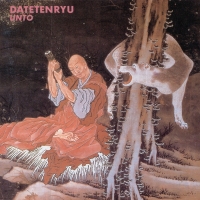
A band that were never documented during their lifetime Datetenryu are now known for two releases: 1971 which is largely shoddy jam tapes from their early career, and the excellent UNTO which documents material circa 1975/78 playing a hybrid prog-fusion that reminds me of many a Krautrock band, a funky/groovy edge akin to Embryo notably, with flashes of Agitation Free, also the echoed organ lead on some bits reminds me of Group 1850, but there's an Oriental flavour too. Not brilliantly recorded, still the music shines through!
UNTO - CD Belle Antique Belle 97370 (1997)
example 
 
East Bionic Symphonia
Born out of the avant-garde improvising outfit Taj Mahal Travellers, these were a 10 piece ensemble, involving lots of electronics and electronic processed instruments in a live setting. Their sole LP release documented two sections of a concert, all sprawling and atonal arrays often more Stockhausen like than anything, although the British outfit Morphogenesis also got close to this on occasions.
RECORDED LIVE (JULY 13, 1976) - LP LAM LA-3001 (1976)
example


Far Out
Born out of the obscure Fumio Miyashita and Osamu Kitajima band, Far Out (in keeping with their name) had jumped on in leaps and bounds from their soft prog roots, releasing one of the all time classics of Oriental rock. Basically just two side-long tracks, each opens slowly from silence, evolving and gaining melodic focus, developing and transforming, with unusual rhythmic structures, ethnic flavoured guitars and sitar feature, and what songs there are counterpoint and propel the music along, often reaching great highs. Tasty stuff indeed. I guess the Pink Floyd comparison is obligatory, although only suggested in the music, which is largely unique and their own.
NIHONJIN - LP Denon CD-5047 (1973)
example

Far East Family Band
The same band as Far Out, re-branded and expanded, Far East Family Band were the biggest international success of Japanese progressive rock. Yet their music was still pretty out there, extremely creative and original. The international fame was largely due to a friendship with Klaus Schulze, who secured the German Vertigo release of NIPPONJIN (subtitled "Join Our Mental Phase Sound") which featured re-recorded versions, mixed by Klaus, of tracks from Far Out's NIHONJIN and Far East Family Band's debut: THE CAVE DOWN TO EARTH. I guess if you only ever wanted one Japanese space-prog album in your collection, NIPPONJIN would be the quintessential one, featuring every classic genre from free-space to heavy, with lots of Mellotron, synthesizers and out-there songs, and even some vocals in English! THE CAVE DOWN TO EARTH itself is more esoteric, and not so well-balanced, with side 2's three tracks becoming ever more languorous. But, no matter how quintessential NIPPONJIN is, their third album PARALLEL WORLD (recorded at The Manor by Klaus Schulze and Gunter Schickert no less) has to be one of the all time very best space-rock albums ever. Featuring only 4 tracks and at an hour long, it is a sonic delight, heavily synthesized rock full of dynamics and poetic oriental vocals. It's as if they'd infused their unique Oriental twist on Floydian space-rock with the spirit of the Cosmic Jokers, a dash of Gong, and much more. It was virtually impossible to better it!
The last album TENKUJIN, although pleasant, was a bit of a damp squib after that. But since then three members reinvented themselves as pioneers of the new-age, most notably Kitaro.
"THE CAVE" DOWN TO THE EARTH - LP Mu Land CD-7139-M (1975)
NIPPONJIN - LP Vertigo 6370 850 (1975)
PARALLEL WORLD - LP Mu Land LQ-7002-M (1976)
example

Flower Travellin' Band
Strange that I'd never done a piece on this band, certainly one of the most important of Japanese rock bands. They had a history going back to the mid-1960's, rooted in the beat group Yuya Uchida And The Flowers, a kind of Beatles and Rolling Stones Japanese style, who almost seamlessly transformed into Flower Travellin' Band. Julian rates their debut ANYWHERE so highly as to feature its cover image on the front of his book. Okay, it's a funny picture with band members riding naked on motorcycles, but is an odd one - excepting mouth-organ intro and outro it's all cover versions! Nothing wrong with that I guess. In fact the opening Louisiana Blues is just the book-ends for a big jam in the middle! The versions of Black Sabbath and Twenty-First Century Schizoid Man are also good, but it's best forget the rendition of House Of Rising Sun! It's okay, but not at all top rate.
Flower Travellin' Band really came into their own with the almost universally acclaimed SATORI, a heady psychedelic album suite, full of complexities and innovation, from the spacious through to the intensely powerful, full ethnic oriental flavours, and a powerful dynamic rhythm section ideally suited to Joe's crazy vocals. The following two albums also included loads of excellent stuff (just one duff cover on the live double) but never quite got to those highs again. But I deem all these three essential!
But, filling in the transitional gap in their history is the 1969-70 rarities bootleg FROM PUSSYS TO DEATH... collecting mostly freaky jams I'm Dead Part One and I'm Dead Part Two totalling 27 minutes, and unreleased stuff from around the time of the Kuni Kawachi and Friends album (more on that below).
SATORI - LP Atlantic P-8056A (1971)
MADE IN JAPAN - LP Atlantic P-8187A (1972)
MAKE UP - 2LP Atlantic P-5073-4A (1973)
FROM PUSSYS TO DEATH IN 10,000 YEARS OF FREAKOUT - LP Apex Records APEX 002 (1997)
example

Food Brain
Okay, Food Brain's sole album SOCIAL GATHERING is quite radical and experimental, but no one can understand why Julian slated it in his book. A seminal super-group of sorts, Masayoshi Kabe (later of Speed, Glue & Shinki, etc.), Hiro Tsunoda (later of Fried Egg, Strawberry Path, etc.), Shinki Chen (leader of Speed, Glue & Shinki) and Hiro Yanagida (solo, and with Masaki Satoh, etc.).
The album starts with the aptly titled That Will Do, with a
vibed-up honky-tonk piano and Wurlitzer like organ on top of a heady freak-rock groove, setting the tome of what's to come. After a little interlude and quaint waltz (!) is track 4, the wonderfully titled Liver Juice Vending Machine which always reminds me of a mixture of Pink Floyd, Faust and Santana, in fact it leads into a Santana like percussion with talking drum coda. There's more Krautrocky stuff to come a-la Gila, and again more Faust touches from sizzled guitar. The album's major freak-out is Hole In The Sausage - a hybrid of freeform acid rock improv and jazz elements, squawking and scuttling around like demented musical dinosaurs! Well freaky, well wild, and still an island unto itself!
SOCIAL GATHERING - LP Polydor MP-2100 (1970)
example

Ichiyanagi, Ranta, Kosugi
A Taj Mahal Travellers related project, from a unique trio: Toshi Ichiyanagi (a classical avant-garde composer, who has worked in many fields including ensemble works, electroacoustic music, etc.), Michael Ranta (not Japanese at all, best-known to us in Wired, he first ended up in Japan in 1970 when working in Jean-Claude Eloy's ensemble, which is how he met Taj Mahal Travellers members) and Takehisa Kosugi (often referred to as the kingpin of Taj Mahal Travellers, then working more as a soloist).
The sole documentation of their work together is a fascinating live LP, taking familiar elements and fusing them into something entirely new. There is a borderline rock edge to this, largely due to Ranta's percussion, also a mystical ceremonial feel, and the ghost of Wired enters on occasions, but Ichiyanagi - the wild-card here - his element is not so easy to quantify. Whatever, in spite of the unimaginative title, this amounts to one of the all time classics of free improvisation.
IMPROVISATION SEP. 1975 - LP Iskra Records 002 (1975)
example

Yuji Imamura & Air
Good jazz-rock albums from Japan are a rarity, so it's nice to know there's at least one as good as this! Yuji Imamura is a well-travelled jazz drummer and I gather his output is quite wide-ranging (although he was also in a band called Tee & Company who released 3 LP's the same year - will have to check them out). It seems though that he was the honcho with a band of younger talent here, all fresh and vibrant, kind of a side-step from the very best Miles Davis infused with loads of new ideas, not least some nice ethnic instruments and lots of electronics, pyrotechnical guitars, etc. A gem!
AIR - LP Three Blind Mice TBM-3006 (1977)
example

Karuna Khyal
Seemingly a different incarnation of label mates Brast Burn, this again is a complex album suite full of Shamanistic edges, chanting voices, clanking rhythms, and sizzling/shuddering tonalities. Think: the heavier parts of Faust's Meadow Meal or Mamie Is Blue but without any songs really, churning, aggressive and experimental. Infectious, hypnotic, and challenging!
ALOMONI 1985 - LP Voice VO-1002 (1974)
example 


Kuni Kawachi & His Friends
In 1970 keyboard player Kuni Kawachi got together a group that were also evolving as the Flower Travellin' Band. They made the one album, KIRIKYOGEN an excellent psych-prog excursion that
pre-empts a lot of other Japanese prog stuff, like To Your World which could quite easily have been very early Cosmos Factory. Of course Joe's vocals also conjure up the Flower Travellin' Band to come. A very varied album in fact, and beautifully crafted. Naturally the
cash-in merchants have reissued this under the Flower Travellin' Band name, and with various different titles.
KIRIKYOGEN - LP London SKK-3000 (1970)
example

Osamu Kitajima
Osamu started out as a singer songwriter, he worked in an early pre Far Out band, and also recorded an album under the guise of Justin Heathcliff, all of little interest to me. But then he found new freedom in 1974 as a multi-instrumentalist, blending traditional Japanese musics and rock in a most original fashion. His BENZAITEN is quite startling and dramatic, very Japanese, strongly featuring the biwa (a traditional lute like instrument) along with more conventional instruments. The mixture of cultures is not unlike some Jade Warrior but attacked culturally the other way round, a comparison much more obvious on his next album OSAMU (from 1977), after which further releases moved ever more new-age.
BENZAITEN - LP Antilles AN-7016 (1974)
example

Takehisa Kosugi
Often quoted as the leader of Taj Mahal Travellers, Takehisa Kosugi has recorded many albums over the years. But what we are interested in is his debut CATCH-WAVE, a 49 minute excursion comprised of two big floaty trips. First is Mano Dharma '74 subtitled: an excerpt from a meta-media solo improvisation - involving violin, voice, two oscillators and an electric fan! This is powerful but cosmic stuff full of strange frequencies and overtones. Wave Code #E-1 is credited as: triple performance by a solo vocalist - but it's more than you'd expect from that! Avant-garde with a kind cosmic "rock" aesthetic, it's unique from start to finish.
CATCH-WAVE - LP CBS SOCM 88 (1975)
whole album

Magical Power Mako
Born Makoto Kurita, Magical Power Mako is a self-styled visionary, a multi-instrumental talent who made some of the most fascinating albums in Japanese rock history. It's remarkable that when he debuted with a solo LP on Polydor he was only in his mid teens. Overflowing with innovative ideas, copious amounts of Japanese culture, crazy eccentric humour, and sizzling rock / prog / psychedelic invention. Cat Side starts with The End Amen with an absurd but poignant monologue about world power struggles, atop an array of cat meows and other sounds, and then we have Cha Cha as the musical trip starts, unfolding surprise after surprise: powerful rock drives, hybrid oriental meets rock concoctions, bizarre collages, dreamy ballads with copious amounts on Mellotron, often venturing off into the cosmos!
Widely acclaimed as the Japanese visionary equivalent of Faust or Battiato, there's a lot of that on the debut, and even more on the second album SUPER RECORD, one that eluded me for decades, it was well worth the wait. The album I know best is his third JUMP as I got that back in the 70's, a heavier less Faust more Guru Guru edged album, but still totally Mako but with more percussion and guitars, some songs and not songs!
I'm probably taking a liberty here including the album MUSIC FROM HEAVEN, as that wasn't released until 1982. But, as far as I know it is recordings from the 1970's. This is the most Faust-like of Mako albums, notably due to fired guitar sounds and mantric rhythms in the manner of Faust's Krautrock it's a near segued opus of tracks that dip and dive in many directions, achieving a suite like whole that rarely lets-up. The other 70's gem is disc one of the HARMONIUM 1972-75 set which documents other excellent recordings from around the time of his debut.
After a hiatus of a decade Mako returned with a string of new releases in the 1990's, some of them excellent, some not so. He is still musically active to this day.
MAGICAL POWER - LP Polydor MR 5044 (1973)
SUPER RECORD - LP Polydor MR 5055 (1975)
JUMP - LP Polydor MR 3077 (1977)
MUSIC FROM HEAVEN - LP Marquee Moon MAGICAL 001 (1982)
HARMONIUM 1972-75 Vol.1 - CD Mom 'n' Dad MoM-004 (1994)
example

Kimio Mizutani
Well-known as the guitarist in several bands: Love Live Life + One, Masahiko Satoh & Sound Breakers, with Hiro Yanagida, and others in this article, Kimio is a key figure of the Japanese 1970's scene.
He only made the one album under his own name though: A PATH THROUGH HAZE, an aptly titled album, here we have an instrumental prog gem, made as if it's in some sort of psychedelic haze, elements of Stomu Yamash'ta notably, and many sections with a Magical Power Mako edge, and on track 4: Tell Me What You Saw we have what sounds like a hybrid of John McLaughlin on DEVOTION and the groovy style of Food Brain, whereas the following One For Janis (Joplin, I guess?) actually sounds more like a Jimi Hendrix styled groove! Throughout it's one of those albums that rewards and rewards again, a classic indeed!
A PATH THROUGH HAZE - LP Polydor MR-5009 (1971)
example

People
And here is Kimio Mizutani again! Quite who was behind this project, it's hard to say. Composer/producer Naoki Tachikawa also produced all three classic Cosmos Factory albums. Which no doubt means that Kimio is related to Hisashi Mizutani of that band, as I suspected.
Co-composer Yusuke Hoguchi was a jazz organist (also in Primitive Community), and a few other musicians involved feature on other albums in this article (Discogs is so useful for this!).
A super-group concept album then! Such an idea could so easily have failed, but this is the 1971 underground, with a cast of talented musicians, all going with the groove and really winging it. So, we're on a trip with sizzling guitars, marvellous organ, percussion galore, fleshed-out with psychedelic effect, huge layered arrangements, and Buddhist ritual chants! Like Kimio's own LP, this is otherworldly, and totally out there - an esoteric trippy classic!
CEREMONY - BUDDHA MEET ROCK - LP Teichiku SL-1368 (1971)
example

Pre Hikashu
Hikashu may be known as one of the leading Japanese new-wave pop groups of the 1980's, but give them their due - they did also make one rather good album, their third: UWASA NO JINRUI "The Human Being" (Eastworld EWS-91023) from 1981 which is the closest any Japanese band got to being as innovatively eccentric as The Residents.
But, before Hikashu is what became known as Pre Hikashu, when they were more of an experimental improvising outfit. 1978 SPRING (aka Spring 1978: Live Part 2) documents a free-flowing improvisation in the manner of Taj Mahal Travellers, but from the attitude of a rock band, sometimes gaining heights that hint at Voice label bands Brast Burn and Karuna Khyal, or Faust in more recent times.
1978 SPRING, PART 2 - CD Transonic TRS-20004 (1998)
sorry, couldn't find any examples

Sab
An obscure synthesis, guitarist, multi-instrumentalist (joined by other musicians on 2 of the album's 4 tracks), Sab's CRYSTALLIZATION is another rare Japanese cosmic / ambient outing. Along with Dada, it's one of the finest of the late 1970's.
CRYSTALLIZATION - LP Vanity Records 0002 (1978)
example


Masahiko Satoh & Sound Breakers
Another of those bizarre super-session conceptual outings, this is one of many that involve jazz legend Masahiko Satoh, well-known for his experimental free-jazz albums. For years we only ever knew of this as AMALGAMATION, as no other identifiable English text existed on the cover! It's also known as "Kokotsu No Showa Genroku" whatever that means. Again we have the guitar genius of Kimio Mizutani, and some international jazz talent, all for an album with the accent firmly on "weird". I suppose it's no surprise that Satoh had worked with Wolfgang Dauner, who similarly had experimented with such diverse elements. Unclassifiable and challenging, start to end!
AMALGAMATION - LP Liberty LTP-9018 (1971)
example

Taj Mahal Travellers
Ah, the marvellous Taj Mahal Travellers! These were an improvising troupe, established in 1969 by "six meta-music creators & one electronic engineer" - to quote popular history on the band. Many compare them to other improv outfits of the era like AMM Music or Musica Elettronica Viva, yet these were actually quite different, not least in their instrumentation - featuring traditional Japanese instruments along with Western ones, notably Takehisa Kosugi's violin, and copious amounts of processing: reverb, echo, etc., things rarely used by AMM or MEV. Really, Kluster, Eruption and Wired are better comparisons, which is why I guess that Julian thought them "rock" enough to feature in his book. They were certainly cosmic, and only ever documented live. All three releases are classics.
LIVE STOCKHOLM JULY, 1971 - 2CD Drone Syndicate DS-01/2 (1999)
JULY 15, 1972 - LP Sony SOL M-1 (1972)
AUGUST 1974 - 2LP Columbia OP-7147~8-N (1975)
example

Tolerance
A very obscure avant new-wave duo. Their debut ANONYM came out in 1979 on the Vanity label (one of three such classics) an understated and strange excursion, featuring electronics, piano, guitar and percussion, plus occasional female voice muttering unintelligibly in Japanese. A fascinating and unclassifiable record. I guess this would have become an unknown obscurity instead of a sought out collectable, hadn't it been the source of a Nurse With Wound album title, and on the NWW list!
ANONYM - LP Vanity 9994 (1979)
example

Tsutsui/Ichihara/Satoh
I first learned of this as an album by Dema, something similar to "Amalgamation" involving the same people I was told. The billing actually goes to: Yasutaka Tsutsui (sci-fi writer) / Kohsuke Ichihara (of Love Live Life + One) / Masahiko Satoh (who I talked about above). Again we have Kimio Mizutani, well-known drummer Akira Ishikawa, and a cast of jazz talent. It's an excellent unclassifiable avant-rock meets free-jazz, riddled with tons of experimentation, Japanese style!
DEMA "RUMOUR" - LP CBS-Sony SOLL-28 (1973)
whole album

Yasutaka Tsutsui/Yosuke Yamashita
Yosuke Yamashita is best known as a modern jazz pianist (records on the Enja label) not in my taste bracket at all. So it is surprising that he'd do a weird borderline experimental ambient meets rock project based on a Yasutaka Tsutsui novel! An enigmatic affair, you'll hear all sorts of things at play in this, not least some stunning special effects, a riff a-la Mike Oldfield, and diversions towards early Magical Power Mako. A huge cast of musicians are involved!
IE "HOME" - LP Frasco FS-7007 (1975)
example


Stomu Yamash'ta
Actually: Tsutomu Yamashita, he's one of the best-known talents from Japan. An extraordinary percussionist, he graduated from the Kyoto Academy of Music, and worked in the contemporary avant-garde with the likes of Takemitsu, Henze, et al., and recorded an album of his interpretations of such works (excellent as that is, I can only fit 50 in a top 50). He also collaborated with Masahiko Satoh on the album METEMPSYCHOSIS, an album that's interesting but arguably too bizarre for its own good, featuring the New Herd jazz orchestra.
With RED BUDDHA Stomu recorded one of the finest of percussion albums, just two side-long tracks featuring a wide array of drums and oriental tuned percussion, all multi-tracked to startling effect. I recall seeing Stomu at around this time, on a children's TV programme doing a concerto for kitchen utensils! Stomu's first step away from the pure avant-garde was his live band Yamash'ta & The Horizon, a super-group quartet, with Takehisa Kosugi (Taj Mahal Travellers), Masahiko Satoh (see elsewhere in this article!), and Hideakira Sakurai (best-known as the composer of "Lone Wolf & Cub" film soundtracks), although pretty weird and bordering on
free-jazz, this is the first step to his own sound.
Seeking a wider audience Stomu now moved to the UK for a while, bringing some of his Japanese troupe with him and enlisting some of the best British jazz and rock talent. The variety of band names made for a confusing discography. Come To The Edge (1/1972) involved Morris Pert, Peter Robinson and others, they were also involved in Red Buddha Theatre (10-11/1972) the core of which continued without Yamash'ta as Sun Treader. After this Stomu got together a new band with his wife Hisako Yamash'ta on violin: East Wind (1973+) featuring at "Canterbury" super-trio of Hugh Hopper: bass, Gary Boyle: guitars, and Brian Gascoigne: keyboards. These three projects recorded three classic albums issued on Island Records, all perfectly fusing oriental elements into prog/rock/jazz/fusion hybrids that have become timeless gems.
Stomu did further albums with East Wind, who changed line-up quite a bit involving more Japanese musicians. Although these later albums are patchy a Swedish radio gig bootleg from 1974 is worth seeking out. Then there's the international Go project, etc., etc....
RED BUDDHA - LP King Records SLC(J) 358 (1971)
SUNRISE FROM WEST SEA "LIVE" - LP London SLC(J)-259 (1971)
FLOATING MUSIC - LP Island HELP 12 (1972)
THE MAN FROM THE EAST - LP Island ILPS 9228 (1973)
FREEDOM IS FRIGHTENING - LP Island ILPS 9242 (1973)
example

Hiro Yanagida
The "solo" debut by Hiro Yanagida: MILK TIME (gorilla picture below) is one of those albums we deem "seminal" in that it is key to a lot of things that followed. It is shortly before Food Brain, and features Kimio Mizutani (didn't he get around a lot?), Keiju Ishikawa (later of Far Out and Chronicle), Hiro Tsunoda (Food Brain's drummer), Nozomu Nakatani (Strawberry Path), etc. That patent "Wurlitzer" type organ sound heard in Food Brain is here, but we have a more prog feel here, and a slightly fried/phased psychedelic edge. It's a powerful trip that covers a lot of ground.
After Food Brain Hiro returned to solo work recording a half-good second LP later in 1971, and featured on a few other LP's mentioned in this article. Not sure if I've heard his third HIROCOSMOS.
MILK TIME - LP Liberty LPC-8037 (1970)
example

Toshiaki Yokota
Another wide-ranging experimental fusion project was the Primitive Community, headed by flute player Toshiaki Yokota. Most of the troupe were rock musicians, including Kimio Mizutani on his patent fuzz guitar, but there were a lot of wild cards at work, a trumpet player, and six percussionists in addition to the drummer. My original notes for this were: Sounds like B.J. Lindh with Food Brain / People - kind of! Well, true - Toshiaki's flute work is often like Swedish legend Bjorn J:Son Lindh, and this does get well freaky and ritualistic at times. There are also so oddball things thrown in like a Hari Krishna chant that totally throws you on first listen and a novel version of The Beatles' Flying - but we like such surprises don't we!
TOSHIAKI YOKOTA & PRIMITIVE COMMUNITY - LP EMI TP-8066 (1970)
example

Yonin Bayashi
Another band in the Cosmos Factory field, at least so circa 1973-74. These started life as a pop band and ended up as a pop band. They debuted on LP in 1971 with the soundtrack album HATACHI-NO GENTEN (Starting Again From Year 20), which was really varied, but had some tracks that hinted at greater things to come. Then, in 1974, they issued ISSHOKU-SOKUHATSU (Dangerous Situation) a carefully crafted rock album, notable for its dynamics, power and distinct Japanese-isms in multi-keyboard driven mixture that's largely instrumental. It starts growing from silence and ends so, and in between it covers a lot of ground, some of it the heaviest Jap prog next to Cosmos Factory's BLACK HOLE or the raunchiest Flower Travellin' Band. There's a live album too of similar excellent stuff, but to include that would make this a top 51!
ISSHOKU-SOKUHATSU - LP Tam AX-8801 (1974)
example

So, that's the 50, an extraordinary and diverse collection of classic albums. You'll need a hefty bank balance if you want to seek out the originals! I only listed original issue catalogue numbers here, but many of these have been reissued several times, most of them on CD, some in Europe, the UK or USA too.

When I started the article I did have a number of other items that I substituted. Some I dropped early on after several shuffles and re-counts. There were however three that I recalled being great (and in Julian's 50) that I decided to drop. But, having written the reviews...

Geinoh Yamashirogumi
The 1976 debut by Japanese percussion and vocal group is so obscure. But is really only a half great one. Side 1's opus "Osorezan" opens with a huge primal scream and an oriental tapestry that grows to a psychedelic rock groove freak-out, topped with sizzling guitar and a bi "zen" chanting choir, then a primal scream closes the crescendo before a calm coda. I could do with a whole album of that. Disappointingly side 2's "Doh No Kembai" is devoid of rock, and is just too much like listening to a Bali ritual ceremony without the visuals!
OSOREZAN (DOH NO KEMBAI) - LP Invitation VIH-6010 (1976)
example

Akira Ishikawa & Count Buffalos
1972 album listed in J.Cope's Japrocksampler top list, starts in a heavy Food Brain meets Flower Travellin' Band like fashion, but after 6 minutes we move into what sounds like an authentic Ugandan tribal ritual, hmmm - under 2 minutes of that - then we switch back the groove! Other tracks continue in that type of fashion, all very disjointed. I made my own "16 minute freak-out mix".
UGANDA - LP Toshiba TP-9520Z (1972)
example

Seishokki
A curio, that I like, but it's not really worthy of top 50 status if you ask me. Unreleased until 2005, it's surprising that anyone released it at all! It opens rather low-fi Mako territory, but sounds like it's recorded in someone's living room! Come to think of it, some of this sounds like our old early 1980's ZBB sessions, or some of the craziest of Volcano The Bear jams. Track 9 is a live recording.
ORGANS OF BLUE ECLIPSE 1975-77 - LP Siwa SA-5001 (2005)
example

And this didn't quite make it...

Mandrake
Unknown of until quite recently, these were another band in the vein of Bi Kyo Ran. Two CD's of unreleased sessions and live material exist. Neither are great quality, but they are rather good, also reminding me of such bands as Cosmos Factory and Flower Travellin' Band, and many an English prog act, not only King Crimson!
UNRELEASED MATERIALS VOL. 1 - CD Belle Antique BELLE 97343 (1997)
example

adapted from Audion #57, pages 3-7 (Autumn 2012)
written by Alan Freeman